Radio Svaboda spoke with a Belarusian involved in the work of the Francis Skaryna Belarusian Library and Museum in London, where part of the archives of the Belarusian Democratic Republic (BNR) has recently been deposited. We republish the article in full.
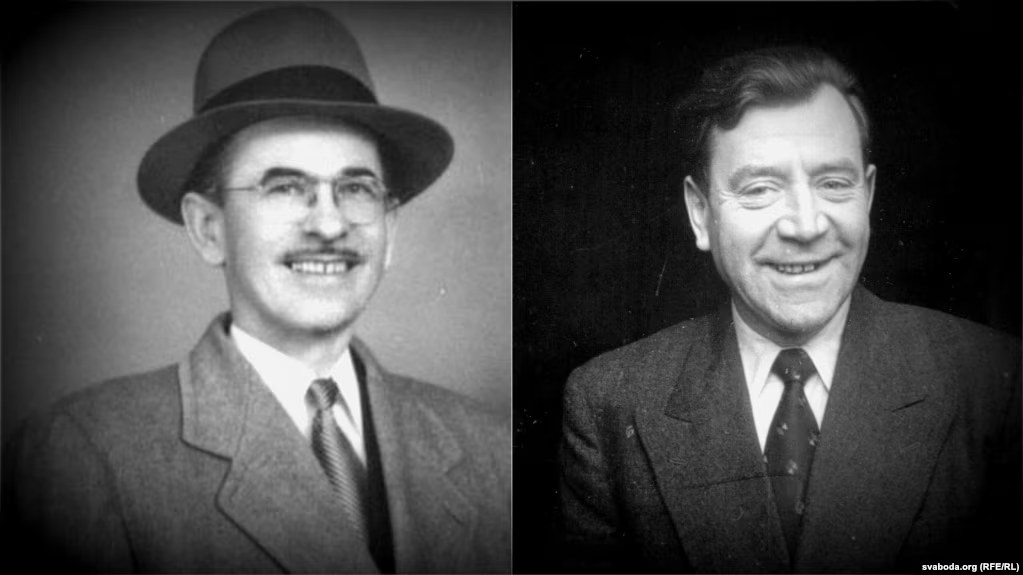
“This year, the collections of the Francis Skaryna Belarusian Library and Museum were enriched with new documents from the archives of former President of the BDR Rada Mikoła Abramčyk and the prominent Belarusian émigré activist Liavon Rydleŭski. These materials are expected to become part of the archive of the Belarusian Democratic Republic (BDR, Belarusian БНР), which has been assembled from documents dating back to 1918.
The discovery of a number of documents from the archive of Mikoła Abramčyk, President of the BDR Rada in exile from 1947 to 1970, was reported in February 2026 by the Belarusian cultural platform Budzma. Part of Abramčyk’s archive disappeared after his death, and only this year did the BDR Rada announce the recovery of a number of important documents and their transfer to the Skaryna Library in London.
The Library already preserves a substantial archive of materials from the BDR period and the post-war Belarusian diaspora. Ihar, a member of the Board of Trustees of the Skaryna Library, spoke to Svaboda about the newly recovered documents and how they were found.
‘I would first like to stress that one cannot yet speak of the discovery of the entire archive of Mikoła Abramčyk, whose traces were lost after 1970 in France, where the former President of the BDR Rada died. At present, we can only speak of part of his archive consisting of organisational and personal documents. Another part of the discovery, which I can already mention, is a group of documents from the archive of Liavon Rydleŭski, a well-known figure of the Belarusian émigré movement. These documents are also extremely interesting and important testimonies to their era,’ Ihar said.
According to him, the documents — including personal papers belonging to Mikoła Abramčyk and Liavon Rydleŭski — were found thanks to a fortunate coincidence.
‘For many years numerous people searched for Mikoła’s archive, and this latest success was aided by chance. A Russian collector discovered boxes of unidentified documents in an antiquarian bookshop in Paris, examined them, recognised their importance, and contacted us. The BDR Rada and the Library then jointly purchased them. For how much? Not for an astronomical sum, but let us say: for an amount worth paying. There is now an agreement with the BDR Rada that the documents are transferred to the Library, where they will be studied. According to this agreement, information about the documents will gradually be made public,’ said the member of the Skaryna Library Board of Trustees.
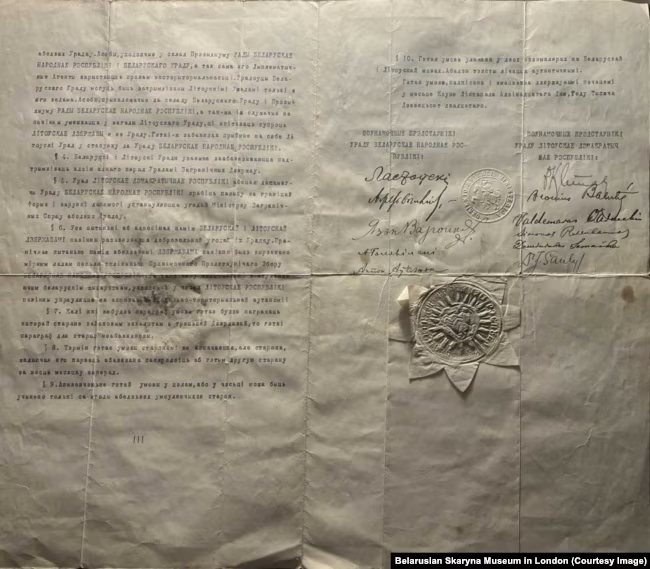
‘What can already be mentioned? Here is the Belarusian original of the “Agreement” between the government of the BDR and the government of the Republic of Lithuania, concluded in Kaunas, then the capital of Lithuania.
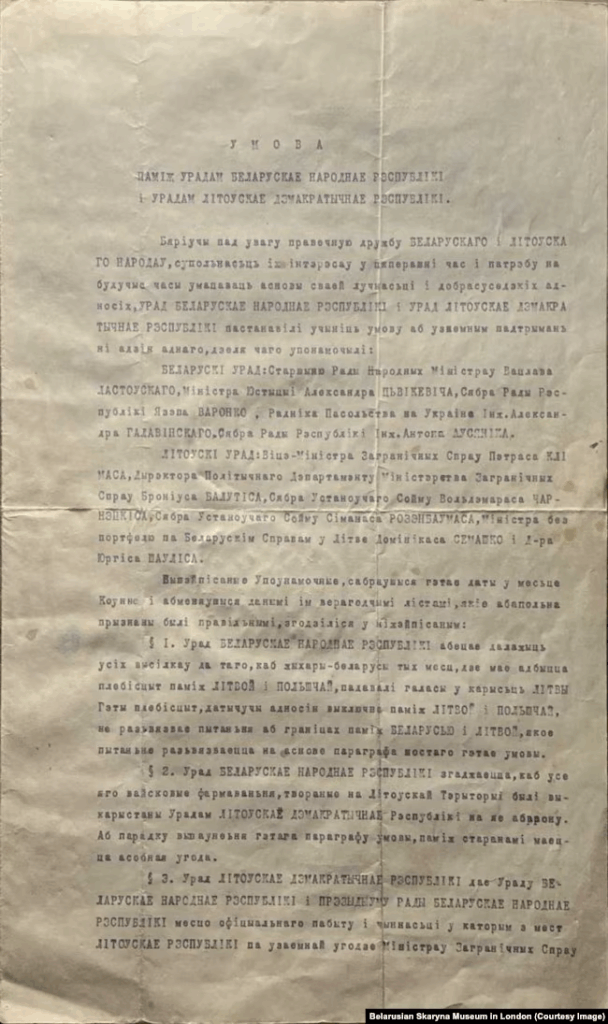
Among other things, the document contains a very important clause stating that “the governments mutually undertake to support one another before the governments of foreign states”. On the Belarusian side, the document was signed by Vacłaŭ Lastoŭski and Jazep Varonka, and is dated 11 November 1920.
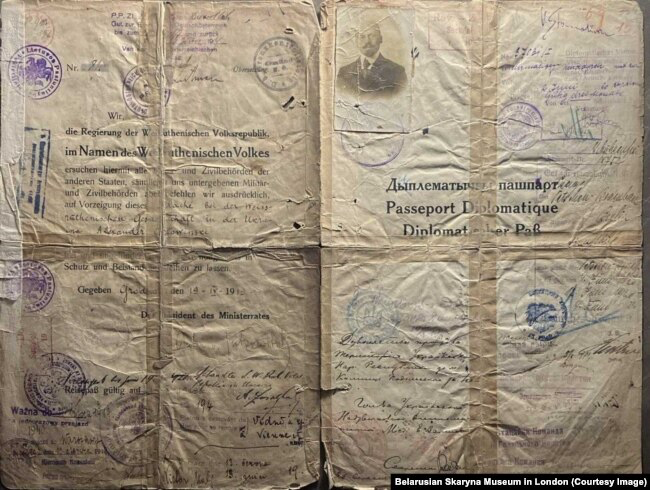
Among the other interesting documents are several diplomatic passports issued by the government of the BNR, including the passport of the BNR representative in Ukraine, Aliaksandr Halavinski, issued in Hrodna and valid until 1919. At that time, such documents could be used for travel throughout Europe.
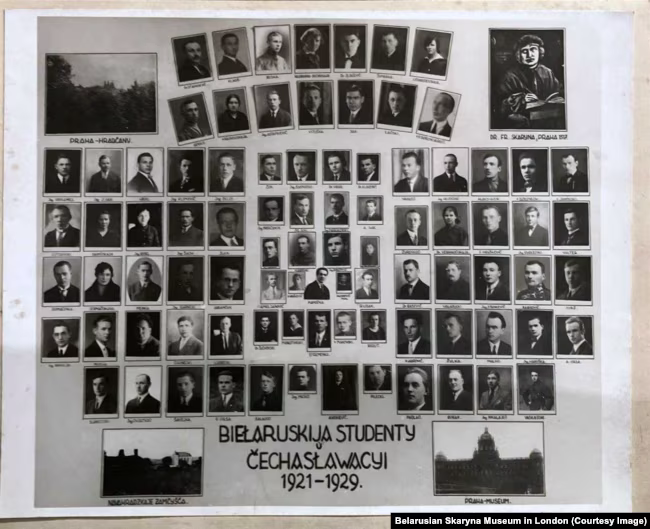
Another fascinating item is a photograph of Belarusians studying in Prague and other cities of interwar Czechoslovakia. It is captioned as a photograph of students, although many of the people pictured are middle-aged. What is striking is just how many Belarusians received education in Czechoslovakia at that time.
Another rich part of the collection consists of the archives of Liavon Rydleŭski, which also contain remarkable discoveries. For example, correspondence between Liavon Rydleŭski and his girlfriend from Western Belarus dating from the early 1930s. The correspondence is deeply moving. There is no politics in it — only human relationships. But these letters are extremely touching; I think documents like these should be shown to people today. What else? Certain personal papers of Mikoła Abramčyk himself: his school certificates, documents from his years in Prague. These come from his personal archive in addition to organisational documents connected with the BNR,’ Igor explained.
According to Igor, the staff of the Skaryna Library have no doubt that the newly discovered documents belong to the archive of Mikoła Abramčyk. As for the remainder of the archive, activists believe there is still a strong chance of recovering it.
‘To find the rest of Mikoła Abramčyk’s archive, which remained with his wife Nina Abramčyk, the search must continue. After her death, the archive disappeared from view, but the fact that part of it has now been found gives hope that the remainder may also surface. The archive could be anywhere,’ Ihar believes.
Mikoła Abramčyk (1903–1970) was one of the key figures of the Belarusian post-war independence movement. In 1947 he formally restored the activity of the BDR Rada in exile and led it until his death in France. Documents from the state archive of the BDR came into his possession during the II World War. On 6 March 1943 in Prague, the gravely ill President of the BDR Rada, Vasil Zacharka, drew up a testament transferring his powers to Mikoła Abramčyk and appointing the poet Larysa Hienijuš as secretary.
Liavon Rydleŭski (1903–1953) was a participant in the Sluck armed uprising and in the anti-Nazi Maquis resistance movement in France, as well as an activist of Belarusian organisations in France and within the BDR movement.
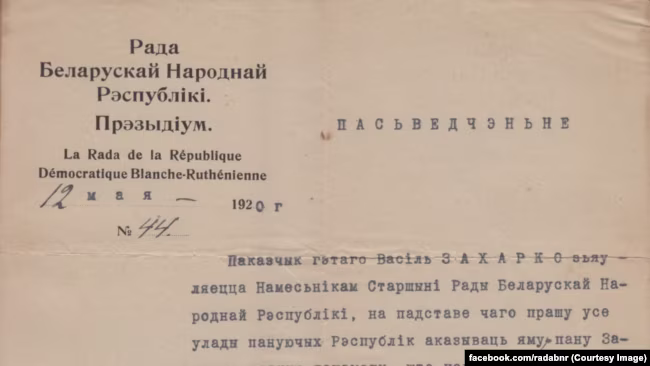
After the death of Mikoła Abramčyk in 1970, the BDR Rada resolved that the Council’s documents from his archive should be transferred for preservation and research to the Francis Skaryna Belarusian Library. However, by 2025 they had passed out of the possession of the BDR Rada.
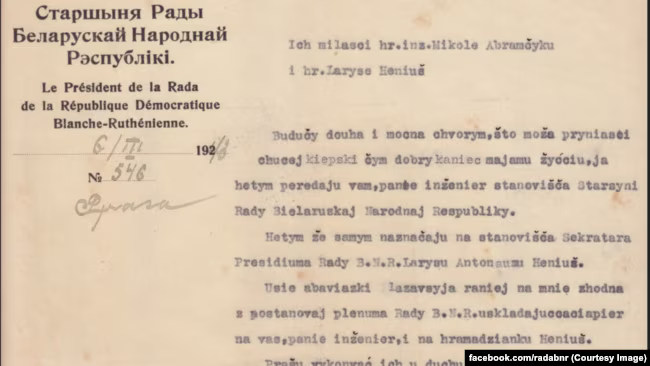
‘Now, following the restoration of the BDR Rada’s ownership rights over these documents, it has been agreed that the BDR Rada transfers the Archive of Mikoła Abramčyk for safekeeping and use to the Francis Skaryna Belarusian Library until the historical mandate of the BDR Rada is concluded in accordance with the Statute of the BDR Rada and a joint decision is taken regarding the archive’s future legal status.
Following a preliminary inventory of the archive, it will become accessible to researchers in the near future,’ the BDR Rada wrote on its website.”