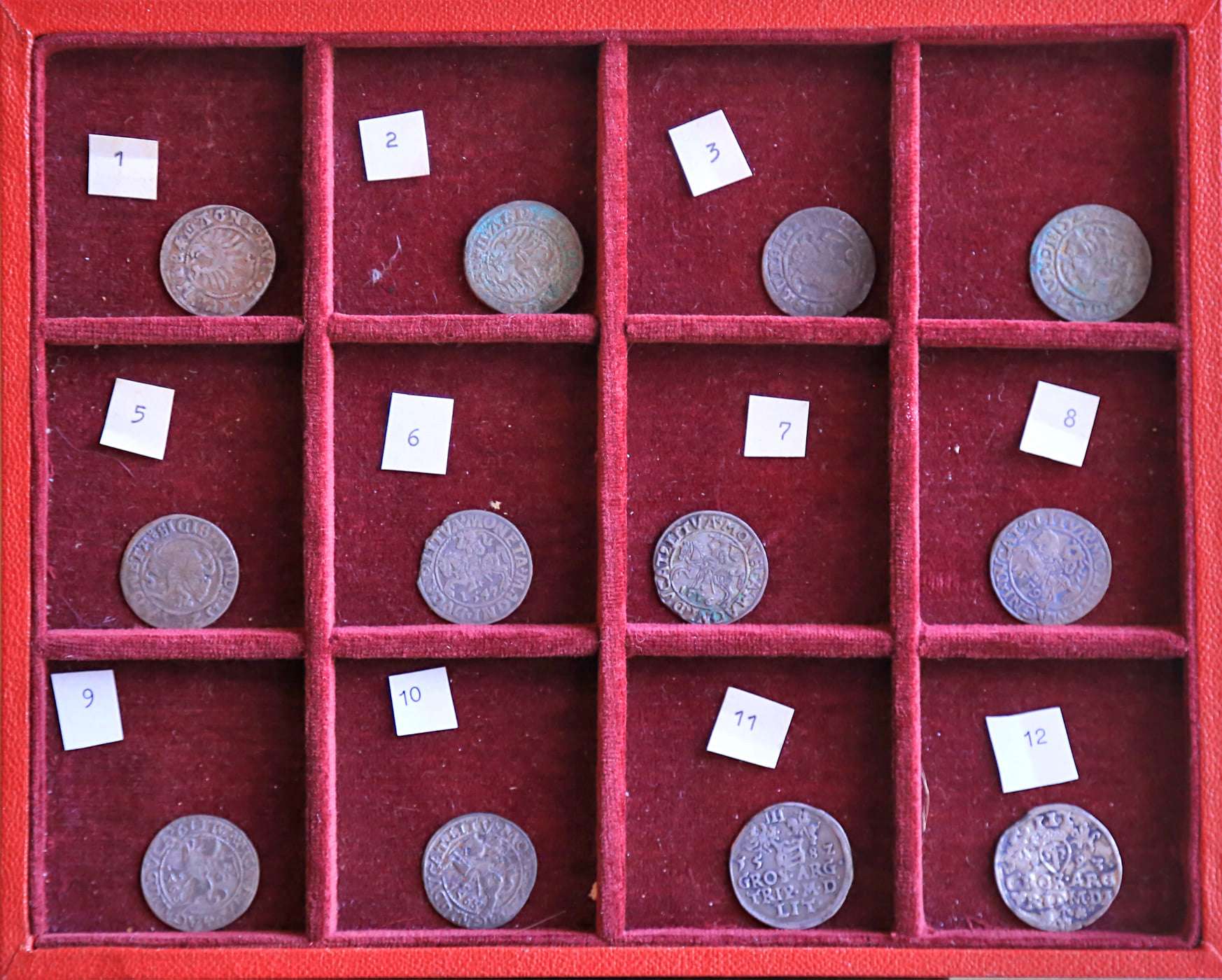
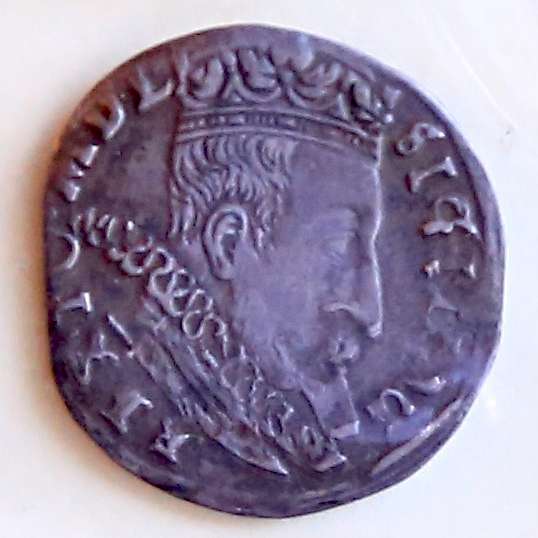
Our first exhibit is a collection of 17 coins that were minted and circulated in the Grand Duchy of Lithuania from the late 15th to the second half of the 17th century, during a period often referred to as the “Golden Age” of our culture. Some of these coins may even have been held in the hands of Francysk Skaryna…
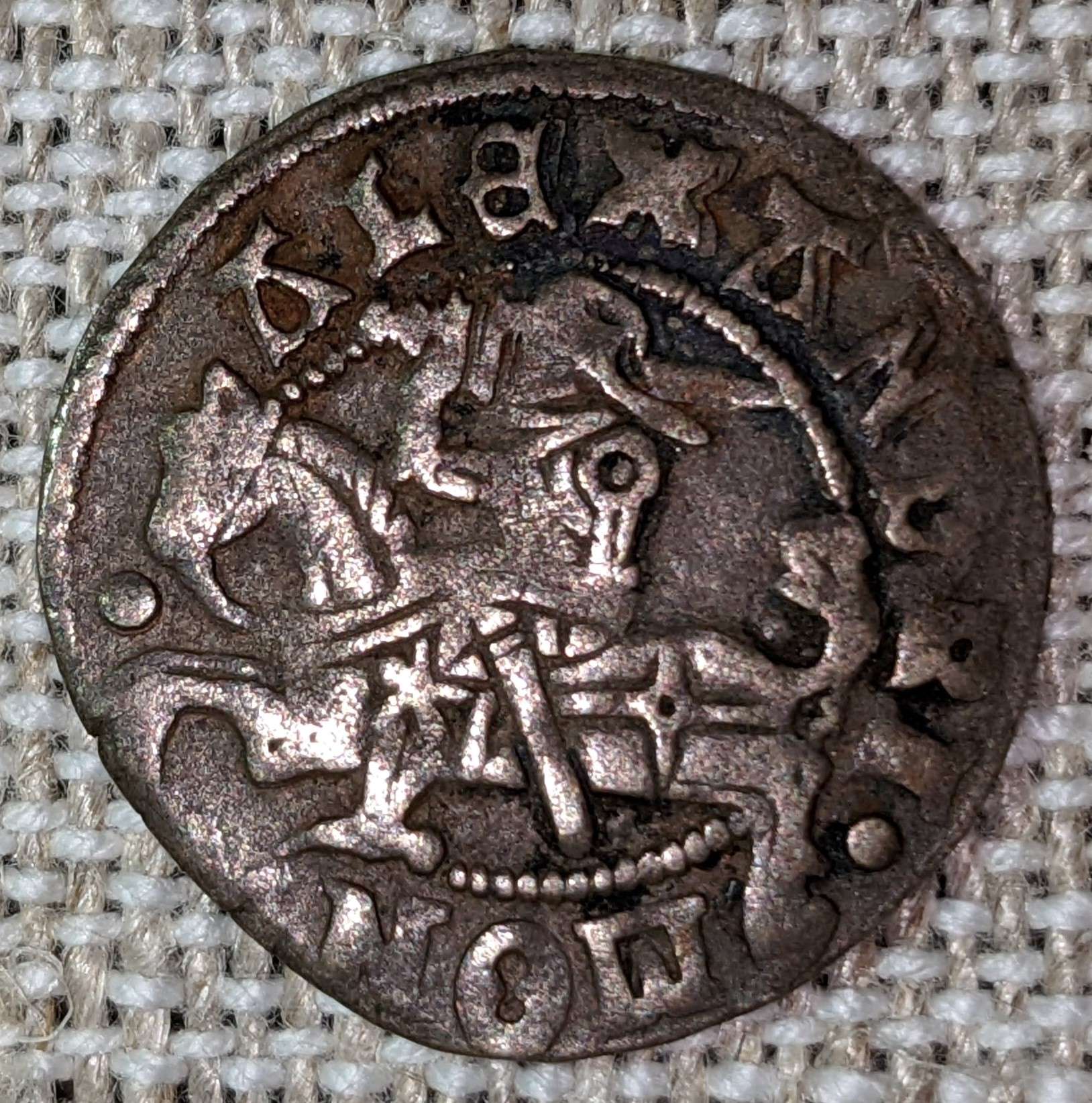
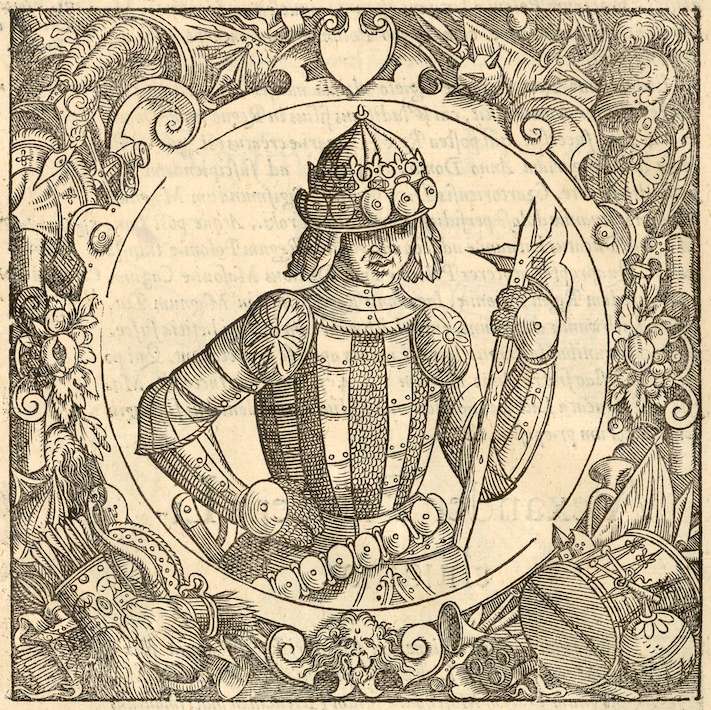
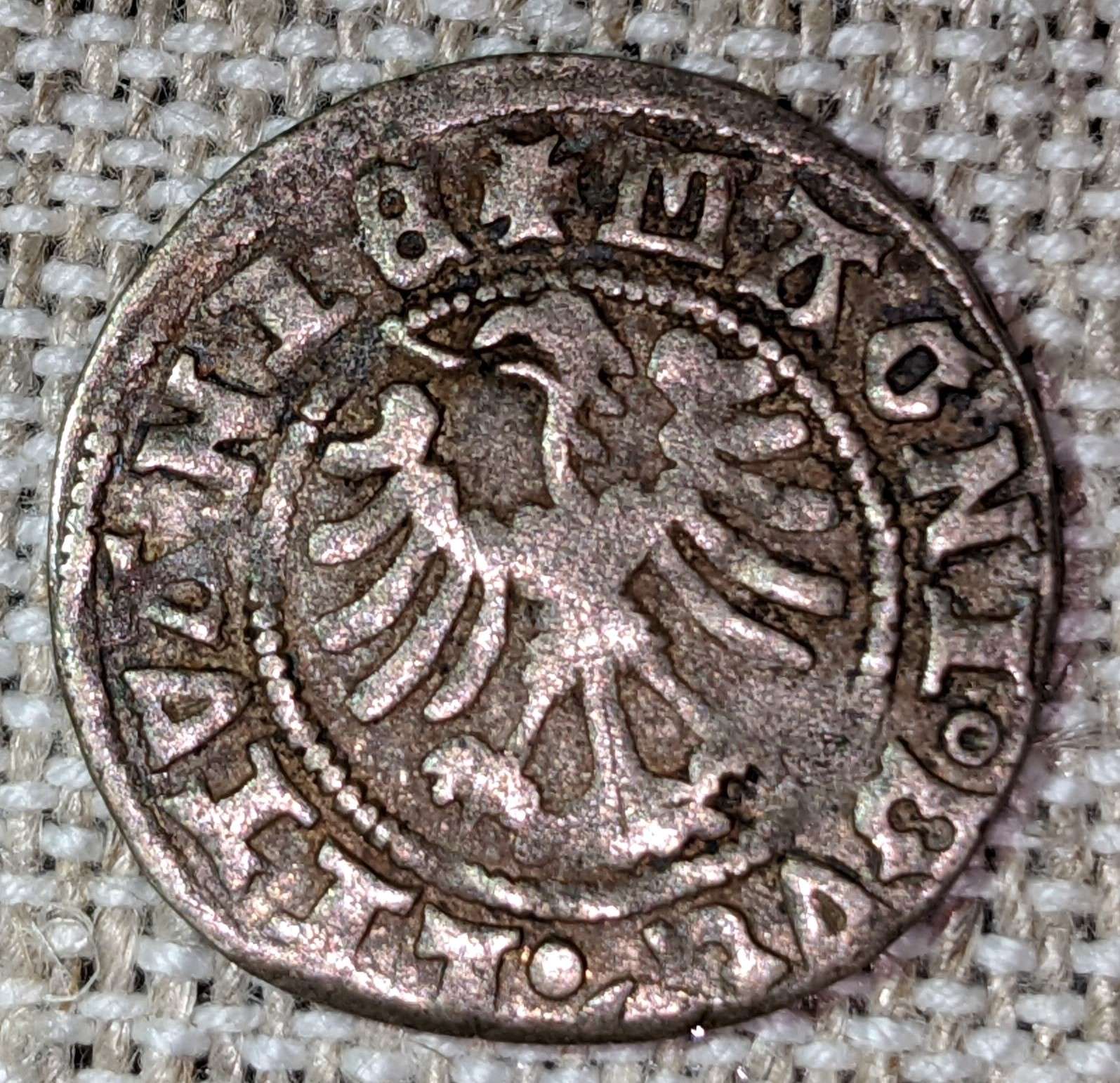
The oldest coin in the Skaryna Library’s collection is a half-groat of Grand Duke Alexander Jagiellon, minted sometime between 1492 and 1501. The obverse bears the “Pahonia” coat of arms (apparently the oldest depiction of the “Pahonia” in our museum’s collections) with the inscription MON ALEXANDRI; the reverse features the Polish eagle with the inscription MAGNI DUC LITVANIE. The engraving depicting Alexander Jagiellon is taken from Alessandro Guagnini’s Description of European Sarmatia (1581), a copy of which is also held in the Skaryna Library.
Among the later coins are four half-groats of Sigismund I the Old, dated 1509–152(?) and five half-“hroš” of Sigismund II Augustus (1547–1565); a silver three-“hroš” coin (trojak) of Stephen Báthory (1587); three-“hroš” coins (1593, 1597(?)) and a “hroš” (1625) of Sigismund III Vasa; and three “hrošs” — copper coins of John II Casimir, minted in Brest in 1666.
The final photograph shows an enlarged silver three-“hroš” coin featuring the image of King and Grand Duke Sigismund III.