In an interview with the ‘Budzma Belarusami!’ portal, Taćciana Astroǔskaja, a historian and researcher of Heniyuš’s work, spoke about the history of the book, the challenges of its publication, and the relevance of the collection for today’s Belarusians. We are republishing the text in full
Skaryna Press has published Spiritus flat ubi vult. Poems 1945–1947, a collection whose manuscript was created by Larisa Hienijuš in Prague eighty-one years ago, shortly before her arrest and forcible deportation to the USSR in 1948. After that, the whereabouts of the collection remained unknown for almost four decades. In an interview with the Budzma Belarusami! portal, researcher of Hienijuš’s work and historian Taćciana Astroŭskaja speaks about the history of the book, the challenges of its publication, and the relevance of the collection for Belarusians today.

Taćciana Astroŭskaja Photo: Taćciana Ułasenka (photograph provided by the interviewee)
Following her forced return from Czechoslovakia to the Soviet Union in 1948, Larisa Hienijuš was convicted and sent to the Gulag.
In the late 1980s, the manuscript of the renowned Belarusian poet reached London. It was only in 1992 that the first typewritten, photocopied edition of the collection appeared there, prepared by the British Belarusian literary scholar Arnold McMillin with the assistance of Fr Alexander Nadson, head of the Skaryna Library.
“To discover a previously unknown manuscript is always a happy and important event, especially when it concerns a major writer whose legacy has remained only partially uncovered because of personal or historical circumstances,” McMillin wrote at the time.
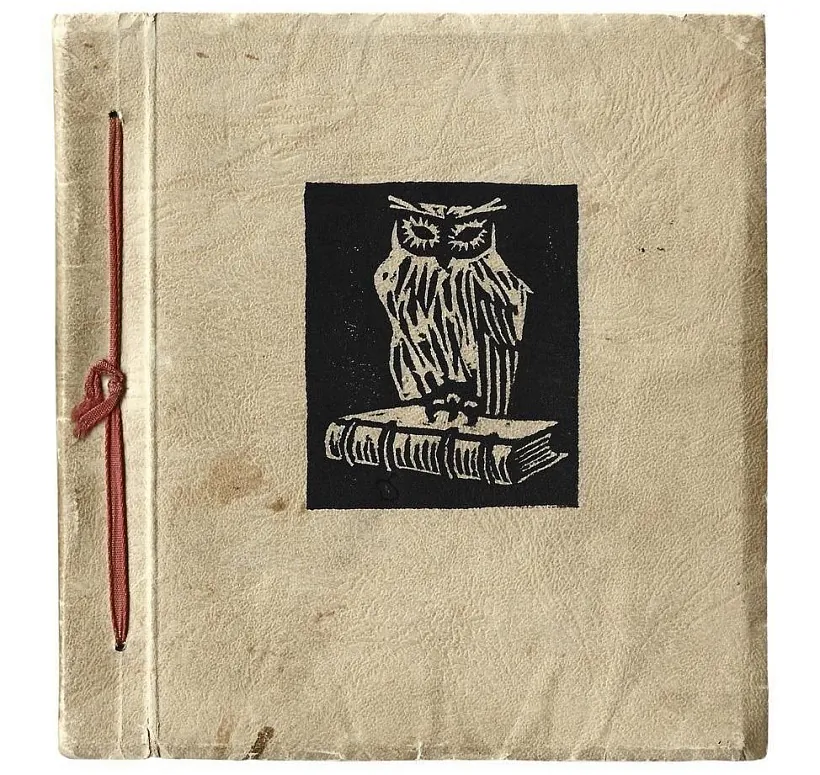
The new book, published in May 2026, reproduces through its printing method and illustrations the manuscript that Larisa Hienijuš herself assembled and bound together, thus inaugurating the Belarusian history of samizdat publishing.
Budzma spoke with researcher of Belarusian dissent and Doctor of Historical Sciences Taćciana Astroŭskaja, who wrote the introductory essay for the collection. She says that the uniqueness of the publication lies not only in its method of production and the maximum authenticity of the manuscript.
— It seems to me that the word you use in your question – uniqueness – is exactly the right one. It perfectly describes both the original and the book that has now been published by Skaryna Press.
The collection existed in a single copy; no draft versions or any other copies are known to us. As I write in my foreword, it is both a handmade and a handwritten publication: Larisa Hienijuš assembled and bound the manuscript herself, thereby inaugurating the post-war Belarusian history of samizdat.
No less unique is the context in which the poet created this book. It was the time when the Second World War was coming to an end. It might have seemed to be a highly optimistic moment, yet Larisa Hienijuš understood that Soviet power was advancing into new territories, that Joseph Stalin had expansionist plans for the countries of Central Europe, and that all this could somehow affect the Hienijuš family as well. Naturally, her premonitions were far from positive.
— The war had already brought many losses to her family…
— Yes, but when she was writing this book she still did not know many things. Of course, the war had profoundly tragic consequences for her large family. When the Red Army entered Western Belarus on 17 September 1939, her father was arrested and later killed in Hrodna. Her mother and sisters were deported to Kazakhstan, where her mother died. Her brothers ended up at the front, and two of her three brothers were killed during the war.
All this forms the context of the book. On the one hand, there is the foreboding of some new tragedy approaching; on the other, there is the war that has just ended, with all its losses and devastation.
At the same time, it seems to me that this book should resonate strongly with contemporary Belarusian readers. In it, Larisa Hienijuš reflects extensively on the experience of exile. One of the central themes of her poetry at that time is longing for the homeland and the impossibility of returning.
— Indeed, it is relevant to tens of thousands of Belarusians today.
— Absolutely. Hienijuš writes every day about how she experiences exile. At that point, she still does not know what lies ahead, that she will soon be deported to the USSR. Yet there is this feeling that she cannot return to the homeland she left in 1936. In any case, she could never have returned there, because by then it was no longer the same country – certainly not the country to which she returned after the camps.
For Larisa Hienijuš, writing was always, first and foremost, a way of surviving traumatic experience. Poetry was at once a form of therapeutic work – a means of understanding what was happening to her and of expressing her feelings.
And so she created this book just before she was forcibly deported to the Soviet Union. She created it literally with her own hands – hence its handwritten and handmade nature – and concealed it for many years.
— How was the manuscript discovered?
— Only forty-one years later, in 1988, at the London (Skaryna) Library. At that time, the manuscript was worked on by Fr Alexander Nadson and the distinguished scholar, Professor of Slavonic Studies Arnold McMillin. They produced the first, “rapid” edition of the collection. This, in effect, was also a form of samizdat: plain paper, a simple publication produced by simple means. It also contained quite a number of inaccuracies, because the handwriting was difficult to decipher, there was no time for detailed work, and there was no expert assessment.
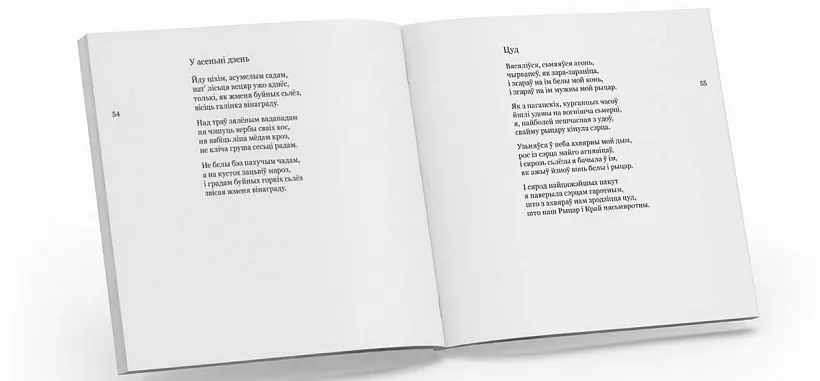
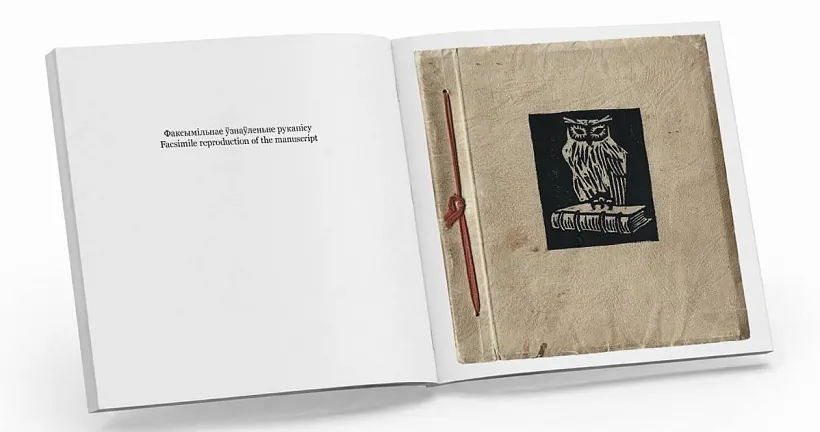
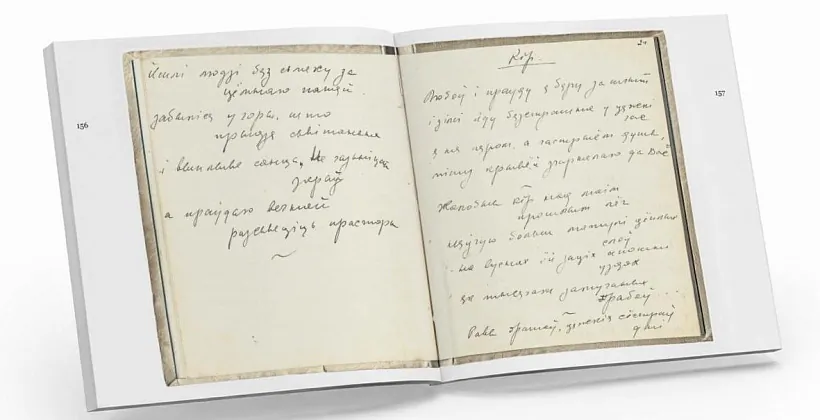
The edition that we are presenting, however, is unique in another sense: it is as accurate as possible. To the greatest extent we could, we sought to convey the materiality of the collection itself. It includes reproductions of every page of Hienijuš’s manuscript. The printed book is as fragile and modest as the manuscript, and we have tried to preserve, as authentically as possible, the distinctive qualities of her language.
As a researcher of Belarusian historical and cultural resistance, the history of Belarusian samizdat and uncensored literature, I also believe that this publication is remarkable because it essentially opens up, as one of the first post-war samizdat books, a long history and a broader historical perspective on Belarusian samizdat and tamizdat than the one to which we are accustomed. It also opens up the history of Belarusian cultural resistance within a wider European and global context.
This book came into being in Czechoslovakia. Incidentally, at roughly the same time, the first uncensored publishing initiatives were also emerging there, such as Edice Půlnoce, founded by Egon Bondy and Ivo Vodseďálek in 1951. Then, after a long period, the manuscript surfaced in London; the book was published in London, sent to Belarus and, naturally, read there, and is now being published in London once again. It is, in this sense, a transnational history.
At present, academic research is witnessing a growing interest in the history of resistance during the period of late socialism. It therefore seems to me that this book also represents a very important step in positioning Belarusian history beyond the boundaries of Belarus and beyond the field of Belarusian studies itself. This is also why we prepared the forewords to the book in English.
— But how did the manuscript of Hienijuš’s book actually reach London? As I understand it, this is not a particularly well-known story.
— No, it is not. We prepared this edition in cooperation with Michaś Hienijuš, the grandson of Larisa Hienijuš. According to Michaś, the book was brought to the London library by his father, Jurka Hienijuš, Larisa’s son. We know for certain that he visited the Library in 1980. At the same time, he brought with him the poet’s prison camp uniform, which is preserved there as one of its most important artefacts. Unfortunately, we have no documentary evidence that Jurka also brought the manuscript with him on that occasion.
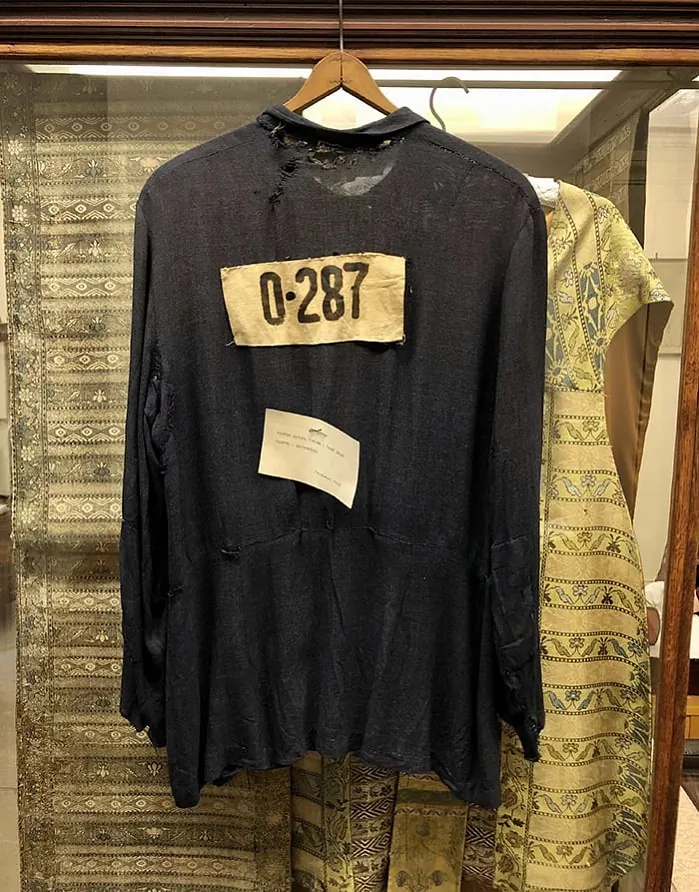
Arnold McMillin, however, writes in his foreword that the book reached the Library in 1988, which was already three years after Jurka Hienijuš’s death. So this story still awaits its full revelation.
— The title of the collection — it did not exist in the first, “rapid” edition, did it?
— This is another interesting and important point. In the first edition of 1992, Spiritus flat ubi vult (a quotation from the Gospel of John, “The Spirit blows where it wills”) was interpreted as an epigraph. As our editor says, it is a very rare situation for a Latin phrase to be used as the title of a Belarusian book.
Yet it is entirely organic to Hienijuš’s Christian worldview, and the quotation is perfectly suited to the principles she upheld throughout her life. We came to the conclusion that it is, in fact, the title. It corresponds very powerfully and aptly to the content of the book — a spirit that knows no boundaries. Larisa Hienijuš could think about her homeland and return to it in her thoughts, and nobody could forbid her to do so.
— In your foreword, you write about the “autonomous maturation of Larisa Hienijuš”, since she remained outside particular ideological and artistic circles. Moreover, she had neither a Belarusian education nor a literary education. She clearly feels different from many Belarusian writers of those years. There seems to be so much that remains unknown to a wider audience about what is, after all, such an iconic figure in Belarusian culture.
— Yes, absolutely. We have this impression that we know Larisa Hienijuš well, because it seems that everyone knows her name. Yet I have found myself speaking about things that are, in fact, unknown to almost anyone and that provoke surprise and admiration. There is still so much in Hienijuš’s own story that we are simply not accustomed to noticing.
And there is so much more of importance in her intellectual legacy.
Indeed, one of the aims of this book, and of my work as I see it, is not only to make it accessible to Belarusian readers, but also to embed it within the context of global academic knowledge.
For example, memoirs of the Gulag constitute a very important field to which researchers continually return: what exactly was the experience of the Gulag? Yet Hienijuš’s book is almost unknown at this global academic level. That is why it was so important for us to translate the forewords into English as well, because this presents Hienijuš as a significant figure precisely within the European and global history of resistance. In the Belarusian cultural sphere, she is certainly present as a cult figure, but this does not mean that there is no room left for discoveries in her story.
— It seems that this grim camp past remained somewhere back there, yet today we see that it is not really past at all.
— Unfortunately. But there is something else I would note in this context about Hienijuš. In society, both then and perhaps even now, there has often been a cliché: “There are no innocent people”, “If they imprisoned someone, there must have been a reason”, “Nobody gets imprisoned for nothing”, and so forth. On the one hand, people know that it was a repressive machine that simply crushed everyone beneath it, but on the other hand they think: “Perhaps there was some fault after all.” Hienijuš, however, possesses absolutely none of this sense of guilt.
Her sense of human dignity and of her own complete innocence and the truth she defended is so powerful that it seems to me to be an excellent example for Belarusians today.
Dignity and nobility emanate from her poems. On the one hand, there is tragedy; on the other, one constantly feels hope in her lines, as though she were saying: “Despite everything that is happening to me, I still possess this light, this hope to which I hold fast, and I shall continue to stand firm and remain myself.” The sense of dignity in these poems is extraordinary.
Larisa Hienijuš’s book Spiritus flat ubi vult. Poems 1945–1947 has been published in an edition of 500 copies and may be ordered from the website of Skaryna Press. The volume was compiled by Ihar Ivanoŭ.
Ryhor Sapiežynski, budzma.org