Writing about Guy at the time of what would have been his 95th birthday makes me undertake a trip down Memory Lane, something that I try to avoid as much as possible, involving as it does an inevitable mixture of nostalgia, sorrow and shame. So, what follows will be a rough assemblage of my thoughts and impressions of a man I would describe as a true friend.
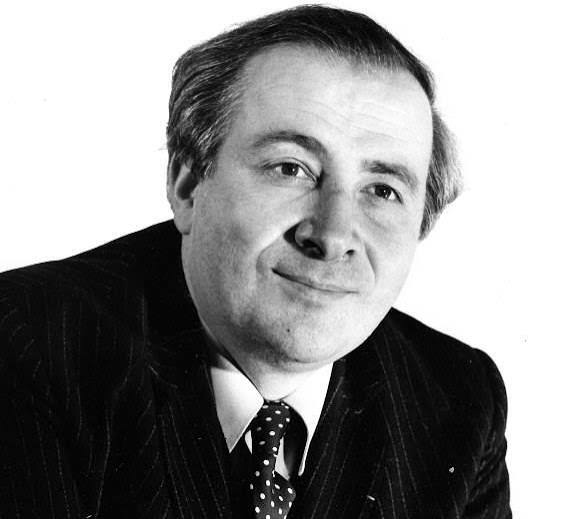
I first met Guy in, I think, 1965, at the same time as I encountered the Anglo-Belarusian Society. The meeting took place in the Burlington House premises of the Society of Antiquaries of London. I was duly impressed even before the meeting began. I cannot now recall what the lecture was about, but I do remember the chairman ensconced in a suitably large chair befitting his position. The chairman was Guy. Several things struck me at this and subsequent meetings – his decidedly ‘plummy’ accent, his complicated origin (Anglo-Irish and French-Breton) and his enthusiasm for Belarus. How did a lawyer who could plead at the bar in both London and Paris come to be interested in a little-studied corner of Eastern Europe? At a more mundane level – after every meeting in Burlington House he would commandeer a taxi to take anyone who wished to accompany him to a substantial meal at the Anglo-Belgian Club in Belgrave Square. He always refused any offer of payment, which led me in those early days to believe naively that the Anglo-Belarusian Society must be very wealthy. I eventually learned the truth. However, the love of hospitality with good wine, good food (often prepared by him) and conversation stayed with him throughout his life.
My contacts with Guy became more frequent after the formal opening of the Francis Skaryna Belarusian Library and Museum in 1971; we were both members of the Board of Trustees, and Guy was its first secretary. There were times at meetings when Guy behaved in a way that may perhaps be regarded as typical of an English gentleman eccentric. He liked to indulge in a little épatage, especially at moments when he felt that meetings of the Board of Trustees were tending to forget that the Library existed in England and was therefore subject to English law. He usually received the reaction he wanted to provoke from the Belarusian members of the Board. His eventually naming himself as Music Librarian also met with disapproval in certain quarters, although who else was there to take an interest in the already extensive collection held by the Library?
The mention of music leads me to consider Guy’s achievements in the field of Belarusian studies. This, for me, is a moment of both regret and shame that I did not at first take Guy seriously. Part of the problem may well have been that he did not appear to take himself very seriously. It took me some time to realise that he was very serious indeed. I never did learn from Guy exactly how and when he collected a large number of Belarusian folk songs and hymns, but what he did in publishing them was an invaluable contribution not just to Belarusian studies, but to the restoration of Belarusian musical culture as a whole. This, together with his attendance as adjudicator at the Mahutny Boža festival of church music in Mahilioǔ, led to his being awarded a UNESCO Diploma for services to Belarusian culture in 2006. Other areas in which he was deeply interested included early printing in Belarus and the Cambridge ‘set’ that took a lively interest in ‘White Ruthenia’ as they called Belarus at the time. Add to this his guidebook to Minsk, published there in 1994, and his single-handed production of the Belarusian Chronicle in the 1990s and early years of the 2000s, and you can begin to fully appreciate a man who was not simply interested in Belarus but actively involved with it at first hand.
I will always remember him as a bon viveur and gifted raconteur, with an inquiring mind and a waspish wit. It was a privilege to have known him.