8 August 2026 marks the centenary of the birth of Father Alexander Nadson — priest, historian, translator, religious and public figure, and one of the founders and leaders of the Skaryna Library in London. As we commemorate Father Alexander, we continue to reflect on his role and the significance of his legacy.
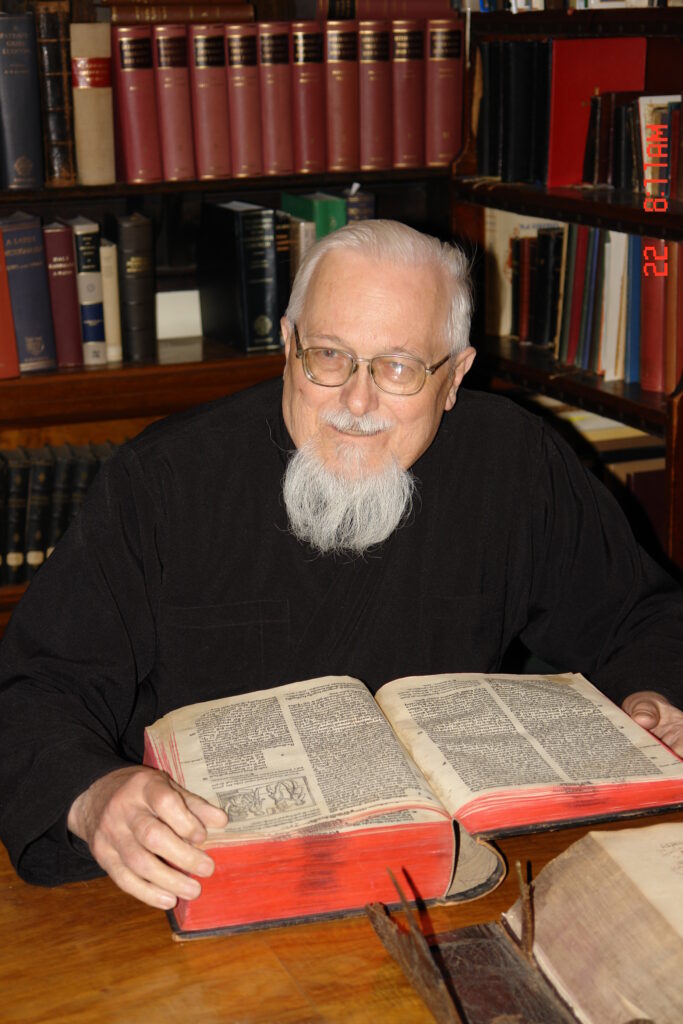
Even during his lifetime, Alexander Nadson was described as a man who was an institution in himself. A true polymath, he made a significant contribution to the study of early Slavic printed books and Belarusian Tatar kitabs, dated the publication of Skaryna’s Little Traveller’s Book, and wrote important works on the religious history of twentieth-century Belarus. His bibliography contains more than 200 scholarly publications, including a substantial biography of Bishop Česłaŭ Sipovič (Ceslaus Sipovich), published in two languages and becoming an important source for researchers of the history of the Belarusian Church and the Belarusian diaspora in the United Kingdom.
Father Alexander’s most substantial body of work was his translation of biblical and liturgical texts. He was the first to translate the vast corpus of Eastern liturgy from Ancient Greek into Belarusian. Thanks to his work, Belarusian replaced Church Slavonic as the language of liturgical prayer — first in the London Chapel of Saints Peter and Paul, where Father Alexander prayed daily for the Belarusian people, and later in many Belarusian churches in Belarus and abroad.
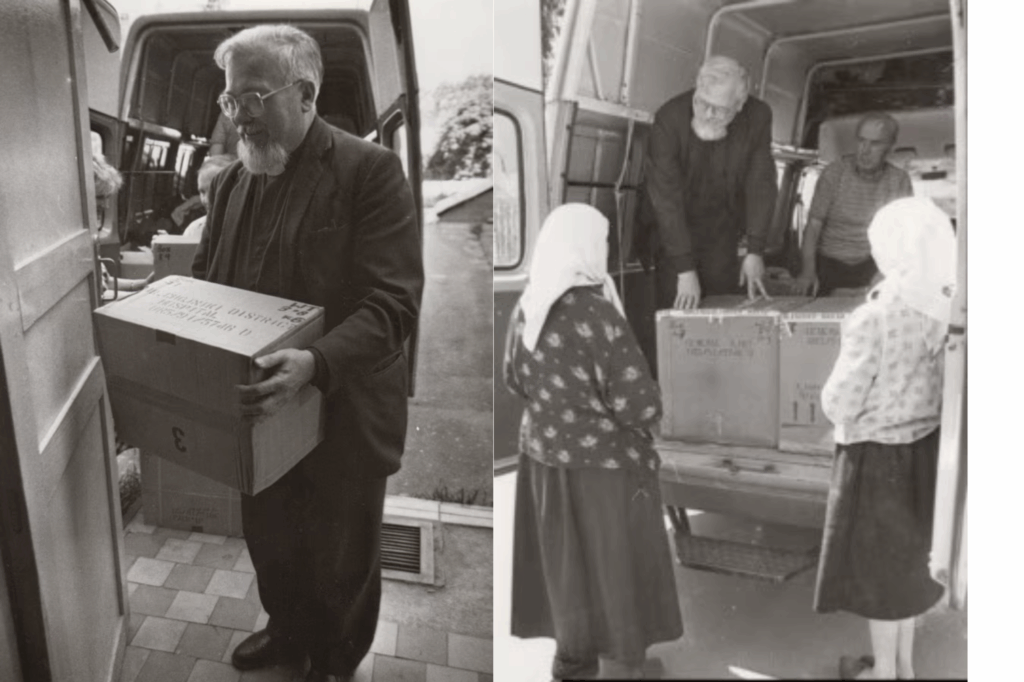
As the Apostolic Visitor for Belarusians abroad, he supported and brought together Belarusian communities around the world, visited diaspora centres, and addressed Belarusians with regular Easter and Christmas messages on Radio Liberty. He founded the Belarusian Radiation Relief Appeal, becoming one of the first people in the West to organise humanitarian assistance following the Charnobyl disaster.
The name of Father Nadson is inseparably linked with the Skaryna Library. Together with Bishop Česłaŭ Sipovič and Father Leǔ Haroška, he stood at its origins, and from the time of its official opening in 1971 he was its permanent director and librarian. With him, the Library went through the entire journey — from its foundation and the formation of its collection, raising donations to support it, searching for rare books at auctions and in second-hand bookshops around the world, and organising book exchanges with libraries in Belarus, to classifying the collection, arranging books on the shelves, working with numerous researchers and visitors, and dealing with the countless major and minor tasks involved in running a library. Under his leadership, the Library became one of the largest research centres for Belarusian studies and centres of Belarusian culture in the West. What the Library is today is, above all, a reflection of his role and his personal achievement.
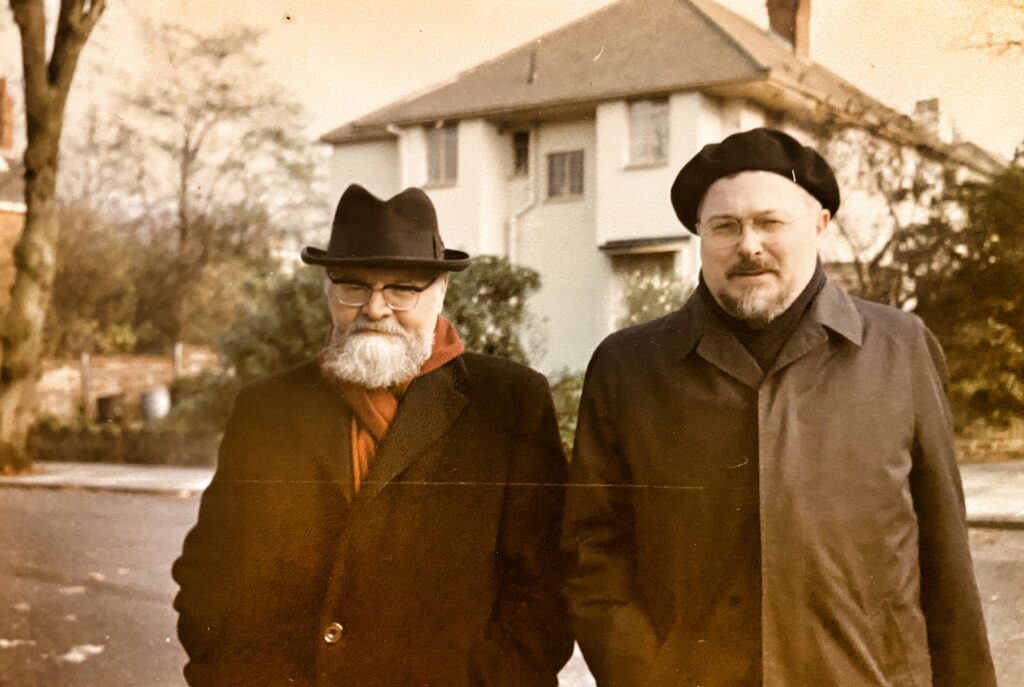
But the process of influence also worked in the opposite direction: while collecting treasures and building the collection, Father Alexander was himself developing as a researcher. Would he have mastered Arabic and become a researcher of kitabs if the 1725 Tatar tafsir had not entered the Library’s collection? Perhaps, but it can be said with certainty that the availability of particular sources influenced the subjects of Father Alexander’s research. At the Skaryna Library, he was not only a librarian but also its first, and sometimes its principal, researcher and reader.
Today, the entire Skaryna Library is a great memorial to Father Nadson. This is where he lived, received visitors and guests, and conducted a vast correspondence with Western Slavists and with friends and colleagues from Belarusian communities in America, Canada, Australia, Poland, France and Germany. Here he established publishing activities, producing newsletters on a photocopier, typesetting them on an old Macintosh, and binding liturgical collections and historical studies by hand. For decades, the Library was the place where he carried out his scholarly and translation work.
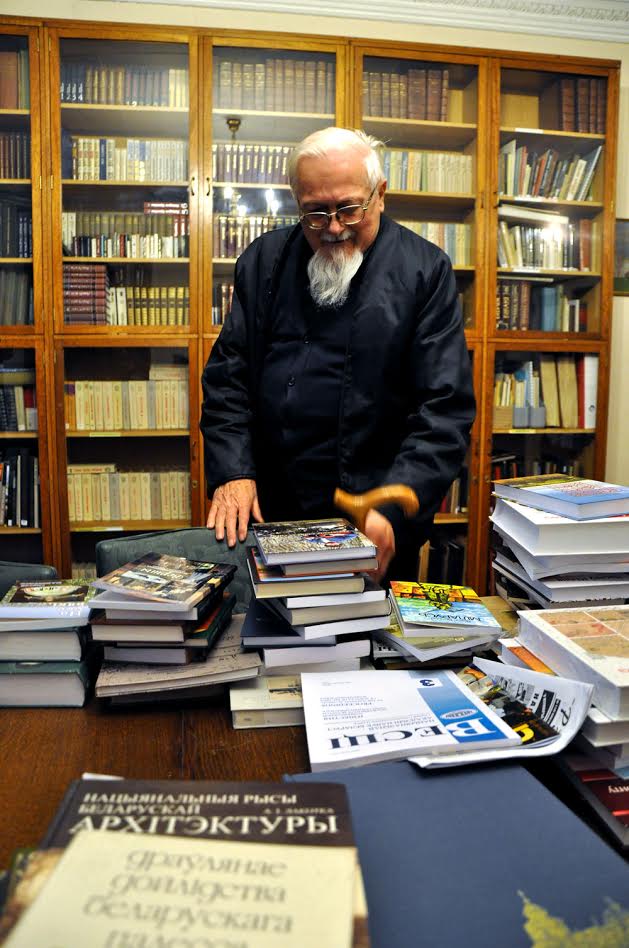
In his former study — now the Library’s office — dozens of well-worn volumes of dictionaries of classical and modern languages and biblical lexicons are kept, the books that Father the polyglot used every day. His words are remembered: “Dictionaries are useful only to those who know the language.” And in this field, he had no equal. He was perhaps the last, if not the only, of our scholars who combined a knowledge of ancient languages and early printed books of the ancient Eastern tradition with an extraordinary familiarity with modern Belarusian and Western literature, and with a love of the vernacular word and humour.
Good examples of this can be found in his critical articles, such as “Скарына і ананасы” (“Skaryna and Pineapples”, ARCHE Skaryna, No. 3, 2001), in which Father Alexander, with his characteristic wit, examines pseudo-scholarly publications in Skaryna studies, effortlessly handling Latin-language sources while appropriately weaving into the text quotations from Belarusian classics and memories from everyday life. This distinctive style of polemic — also recognisable in the style of Father Alexander’s sermons — makes even his most serious critical texts fascinating reading, sometimes resembling a detective story. The article “Caveat Lector” (ARCHE Skaryna, No. 1, 2002) is another vivid example of how different Father Alexander’s scholarly and critical approach, rooted in Western academia, was from the ideologised pseudo-scholarly publications of some Belarusian researchers of religious history and spiritual heritage. And how aptly the words of Jakub Kołas’s Uncle Antoś about dumplings with juice sound when Alexander Nadson quotes them as he sums up his scholarly review!
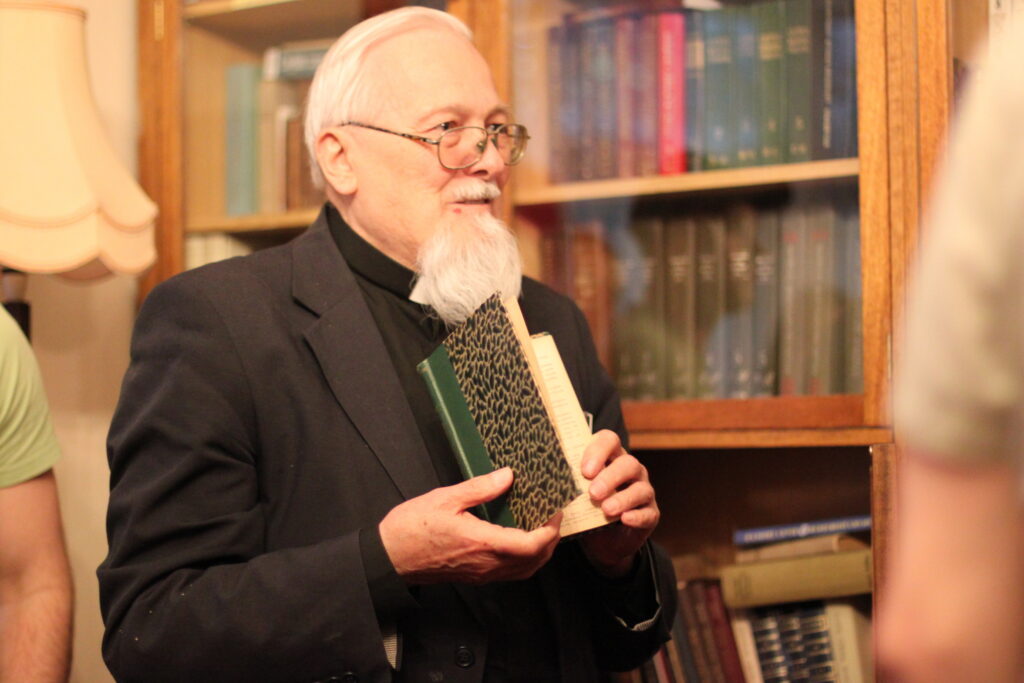
Father Alexander applied a similar critical approach to his work as a translator of biblical texts. Alexander Nadson’s critical comments on his translation of the Psalter, preserved in the archives of the Skaryna Library, constitute a comparative study that has no precedent in Belarusian biblical scholarship. Among other things, it demonstrates how errors in early authoritative versions of the Psalter became established in usage and were carried over into Belarusian and other translations, while proposing new, well-founded translation variants.
An important part of Father Alexander’s work as a librarian was supporting Belarusian studies in English, working with Western researchers, and taking part in events organised by the Anglo-Belarusian Society. His scholarly articles were published in The Journal of Byelorussian Studies, where he also regularly published bibliographies of works on the Belarusian language, literature and history. An incomplete bibliography of Father Nadson’s own works up to 2009, published on the Casasloviec website, demonstrates the scope of his scholarly and journalistic contribution, the full significance of which has yet to be recognised at the national level.
The jubilee year provides a good opportunity for such recognition. The first Nadson Readings, “Understanding Freedom”, held this year in Vilnius, aimed to draw the attention of scholars and the wider Belarusian community to the study of Alexander Nadson’s life, activities and scholarly legacy. It was the first international conference dedicated to him, bringing together researchers from a range of fields — linguistics, history, diaspora studies, art history and biblical studies — as well as clergy and representatives of the Belarusian community from different generations: those who knew him personally and those who continue his work today.
The Vilnius Readings opened the programme of scholarly events marking the centenary of Father Alexander Nadson. In September, the Skaryna Library, together with the Institute of the Belarusian Language, will hold a linguistic symposium in his honour, while in October a separate section dedicated to Father Alexander’s memory is planned at the conference of the Department of Belarusian Studies at the University of Warsaw.
The first substantial monograph dedicated to the life and work of Father Alexander Nadson is being prepared for publication this year by Skaryna Press. Its author, Uładzisłau Harbacki, has spent several years collecting materials, researching the archive of Father Alexander’s correspondence, publications, numerous interviews and addresses in the media, and interviewing contemporaries, scholars, friends and former students of Father Alexander. The result of this work is a narrative in which Father Alexander emerges not only as an outstanding priest, thinker and researcher, but also as a vivid and lively personality, a friend and teacher, a person with an extraordinary sense of humour and a love and curiosity for people and for life.
At the new Church of St Cyril of Turau, Father Alexander’s successor, Father Siarhiej Stasievič, continues his liturgical ministry. On 8 August, the Belarusian community in London commemorated Father Alexander with a communal prayer and visited his place of rest at the cemetery in East Finchley. And, to mark the centenary of Father Alexander’s birth, a new generation of Belarusians left its own “Letter to the Future” at the Skaryna Library.
To mark Father Alexander’s centenary, the Library has opened an exhibition of his publications, as well as interviews and articles about him published in Belarusian media. Visitors will be able to browse his books, articles, newsletters and calendars, many of which he himself typed, typeset and printed in London.
Living in exile and embodying the European intellectual and cultural tradition, Father Alexander was an expression of Belarusian culture and identity, a collector and researcher of Belarusian heritage. His scholarly and public legacy, and the Skaryna Library that he created, have become a national treasure shared by us all. May Father Nadson’s rich legacy continue to inspire new generations of researchers and those working for Belarus! Father Alexander once said to his successors: “I have done what I could — it’s now your turn!” So let us strive to do our best!
By Karalina Matskevich