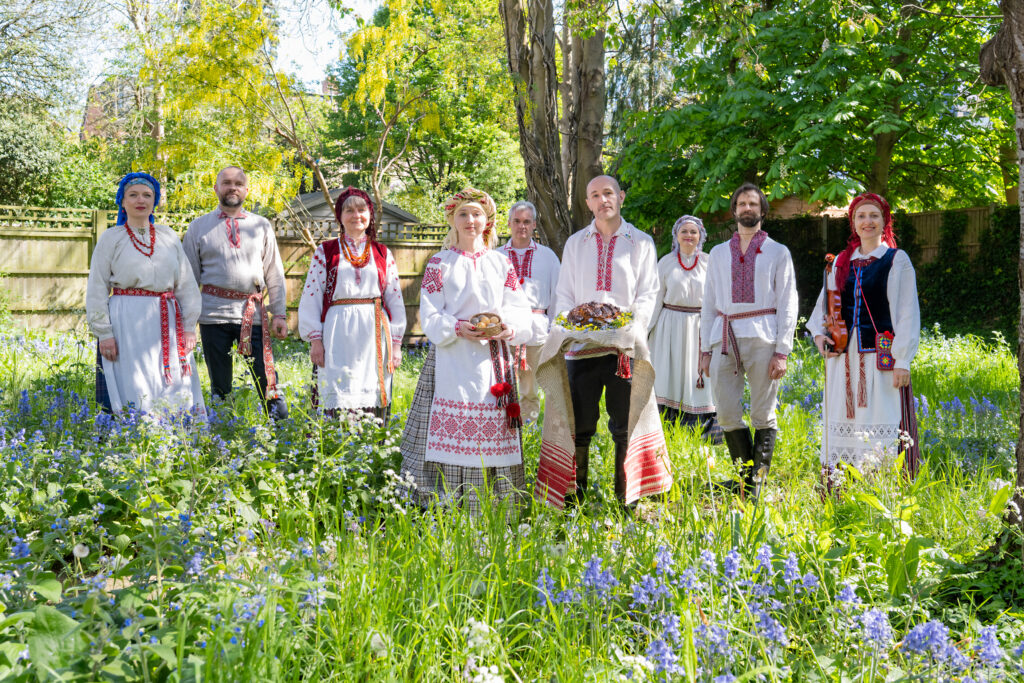
The Vir folk ensemble was founded in autumn 2024 at the Francis Skaryna Belarusian Library and Museum in London. Its core consisted of members of an amateur singing circle that Karalina Mackievič and Alaksiej Šyrnievič organised at the library in 2021. For two years the group was also helped by Alesia Mańkoŭskaja. When the group began working under the direction of the folklorist Evelina Ščadryna in 2024, meetings became regular, systematic work on the repertoire began, and the first performances soon followed. In this way the singing group gradually grew into a full folk ensemble with its own creative concept, repertoire and name – Vir.
The ensemble’s work is based on an understanding of folklore as a living cultural tradition. Its members study and perform folk songs, dances and games from different regions of Belarus, learn about traditional rituals and festivals, and strive to experience them together in keeping with tradition.
The ensemble’s repertoire is built on authentic folklore recordings from archival audio collections and field materials. The ensemble draws on recordings held by the National Academy of Sciences of Belarus and the Belarusian State Academy of Music, on online folklore resources, and on materials from the field research of the Department of Ethnology and Folklore at the Belarusian State University of Culture and Arts, as well as the ensemble leader’s own expedition recordings.
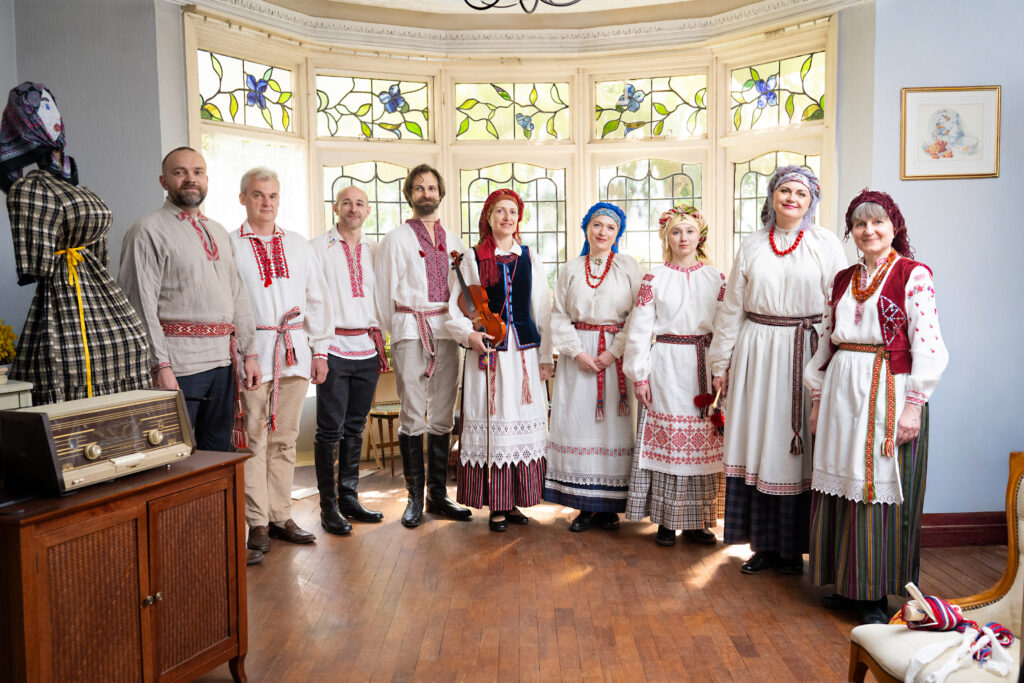
Learning takes place mainly orally, through listening and absorbing the tradition directly from recordings of folk performers. Particular attention is paid to the regional features of the singing tradition. At the same time, the ensemble does not aim to reproduce exactly the manner of individual singers, but to grasp and convey the characteristic features of local performing traditions.
During its existence the ensemble has taken part in a number of cultural events of the Belarusian community in the United Kingdom. At the time of publication, Vir’s repertoire includes calendar and ritual traditions from different regions of Belarus: Christmas carols and Easter songs, the rite of Hukańnie viasny (The Calling of the Spring), Kupalle, Jurja (St George’s Day), autumn gatherings (viačorki), and folk games and dances. The repertoire is constantly growing. The members perform at concerts, festivals and cultural events, organise their own programmes, and introduce Belarusian and international audiences to the traditional culture of Belarus.
The ensemble’s work is made possible by the Belarusian cultural and religious centre in North London. The members use the space of the Skaryna Library and the Belarusian Catholic Mission for rehearsals and performances, and the rich collection of folklore and ethnographic texts at the Skaryna Library helps with choosing repertoire and preparing festivals.
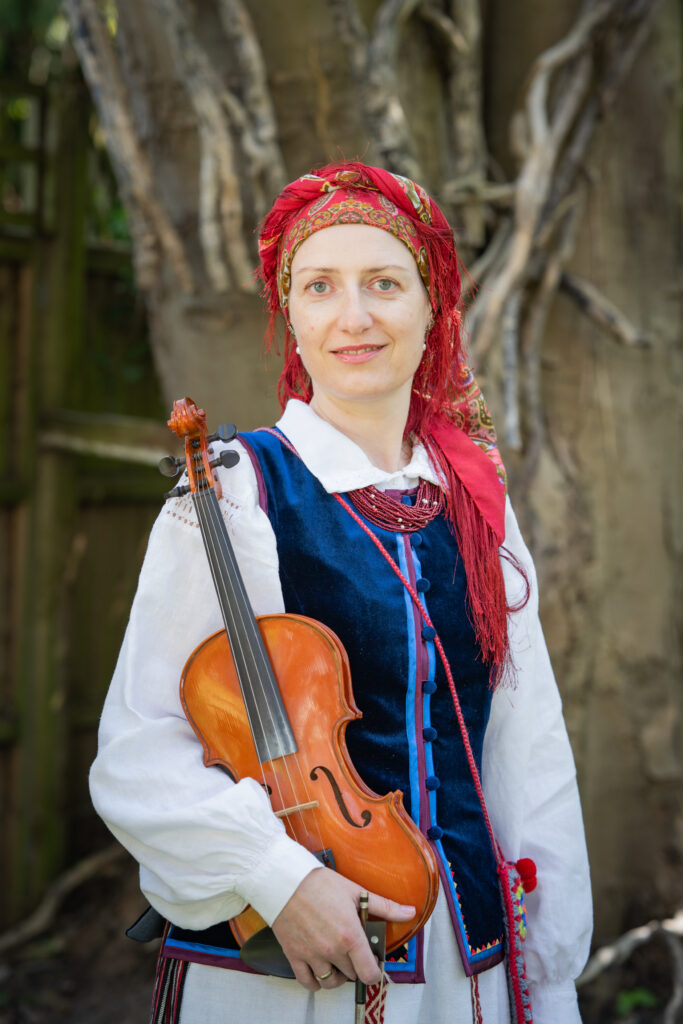
Evelina
I am the leader of the Vir folk singing group and a researcher of Belarusian traditional musical culture. I have 20 years of experience teaching Belarusian folklore and vocal and choral disciplines at the Belarusian State University of Culture and Arts (BSUCA) in Miensk.
I first heard folk singing in an authentic performance at a Belarusian folklore class at the Glinka Music College. My path to folk music began through an academic music education. Over time I realised that I wanted to immerse myself fully in this incredible world of folk wisdom by studying the regional singing styles of Belarus and traditional music as a whole.
I am happy that for many years I was able to train specialists in traditional culture and to see how appealing this deeply rooted art is for young people, many of whom devote their professional lives to it.
After arriving in the United Kingdom, I joined a circle of enthusiasts for whom it is important to preserve their identity through language and traditional art and culture in the multicultural setting of a metropolis called London. Today Vir is for me not only a space where I use my professional skills, but also a team of like-minded people and close friends, with whom it is a joy and a comfort to be together in any circumstances.
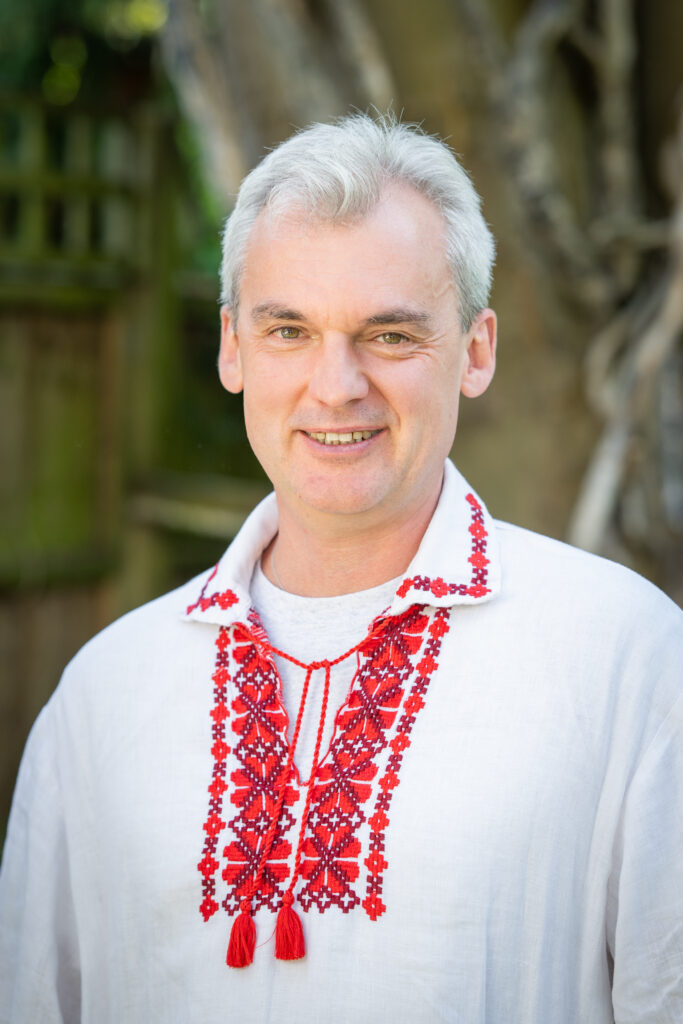
Paval
I am a London lawyer, sitting on the boards of various Belarusian organisations in Britain.
I began singing folk songs back in Belarus, when as a schoolboy I went carolling with the Homel Talaka in the late 1980s, and when, as a BSU student in the early 1990s, I belted out “Biedna studenctva” at picnics in Viazynka.
After moving to London in the mid-1990s, I joined the Belarusian community in Finchley and began singing here at Kupalle and Kaliady celebrations.
Vir has taken our singing to a new level, creating a professional yet very friendly atmosphere. I joined Vir in autumn 2024 and have never regretted it, despite the high standards of our teacher, Evelina.
Our singing is at once medicine for the soul and nourishment for the mind.
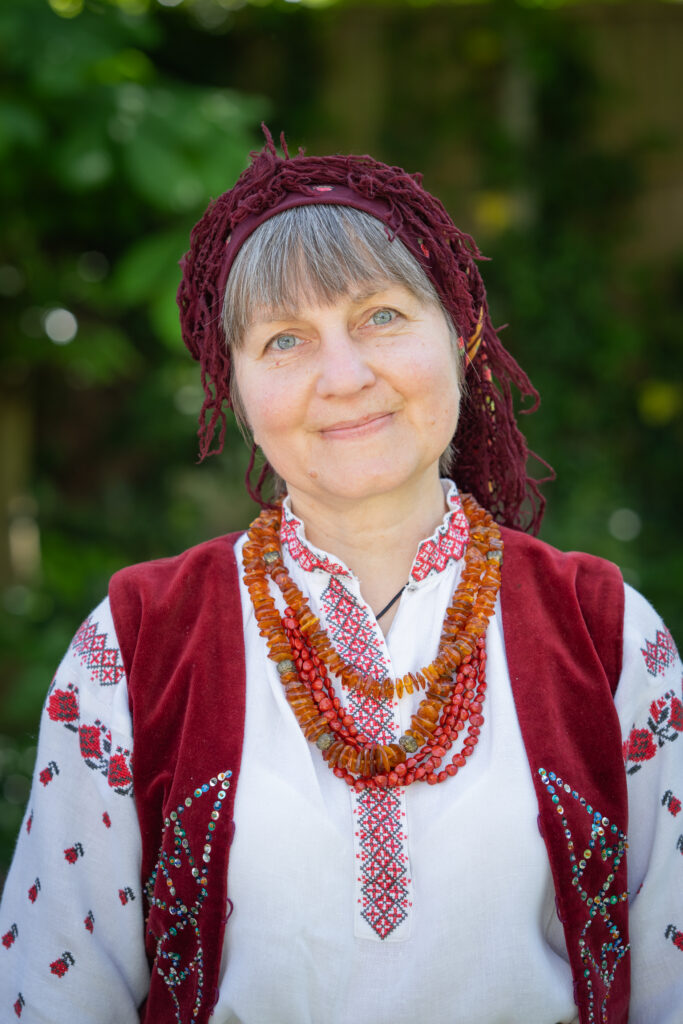
Karalina
I am a biblical researcher and work in the heritage sector. I come from Miensk, and I first encountered folk singing in the Miensk Talaka in the 1980s. Since then, traditional culture has been a big part of my life. At the London Belarusian centre at the Skaryna Library we have held Kupalle celebrations since 2001, and our children grew up on traditional games and songs. Gradually, people with authentic knowledge of the tradition began to join us. Together with Aloša Šyrnievič, we once sang “Carkoŭka” on a bridge over the Thames and decided not to leave it at that. As a result, a singing circle formed, then Evelina found us, and the singing group Vir was born. I am happy that we have the chance to live and preserve the tradition while living far from home as well as enjoy singing – an extraordinary way to be together and to hear one another.
Hanna Š
I graduated from the Faculty of History at the Maxim Tank Belarusian State Pedagogical University. I have been enchanted by folk singing since childhood, when I heard it from the wired radio in my grandmother’s house, and when Baba Ania would quietly sing to herself as she lay on the stove bench. I have always been a music lover. I had long wanted to learn to sing, and at last my dream has come true in London.
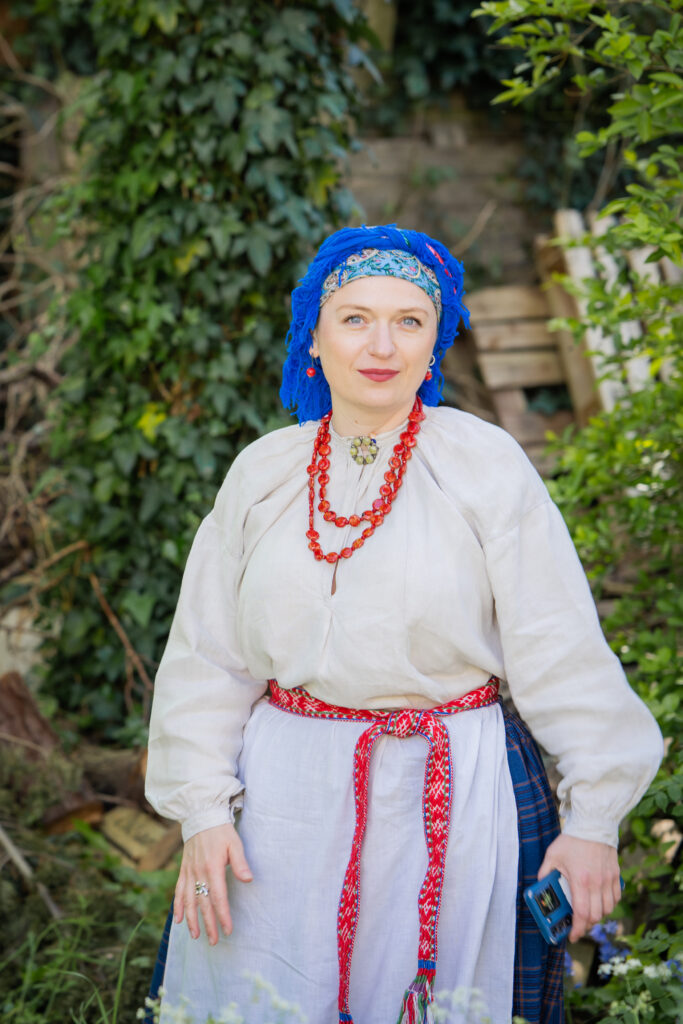 Hanna, participant of the Vir folk singing group
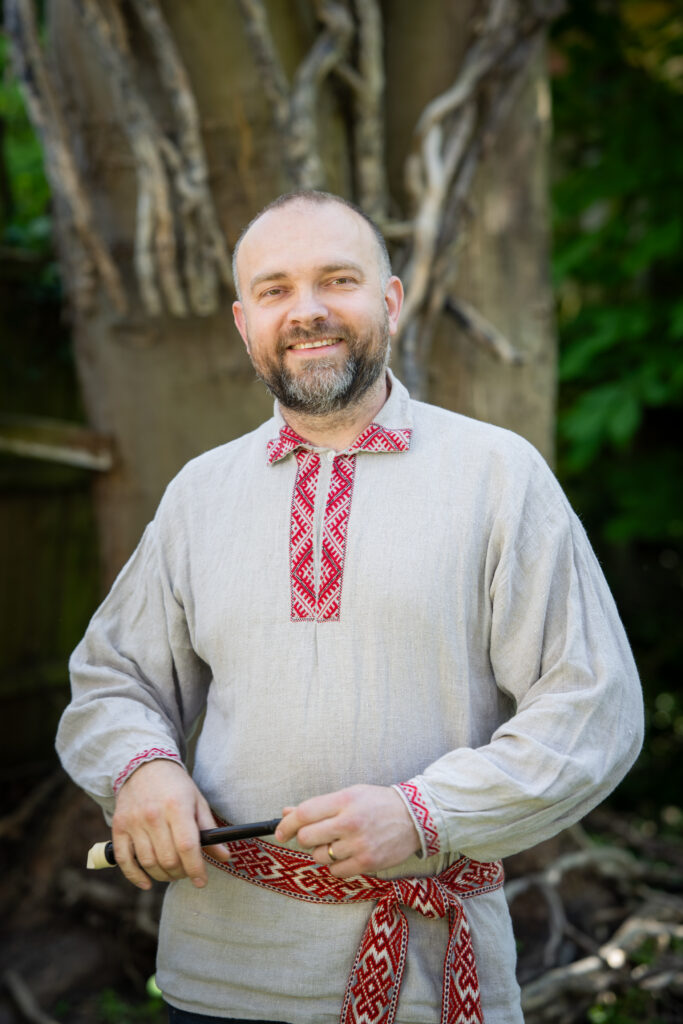 Andrej, participant of the Vir folk singing group
Andrej
I was born and grew up in the Viciebsk region. I moved to London at the age of 21 and unexpectedly stayed here. I have always been drawn to Belarusian culture, and folk song is what unites different generations. It joins the present with the past, and our ancestors with us.
I work for myself and have almost no free time. Singing has become an outlet for me, and I always await our sessions with great impatience.
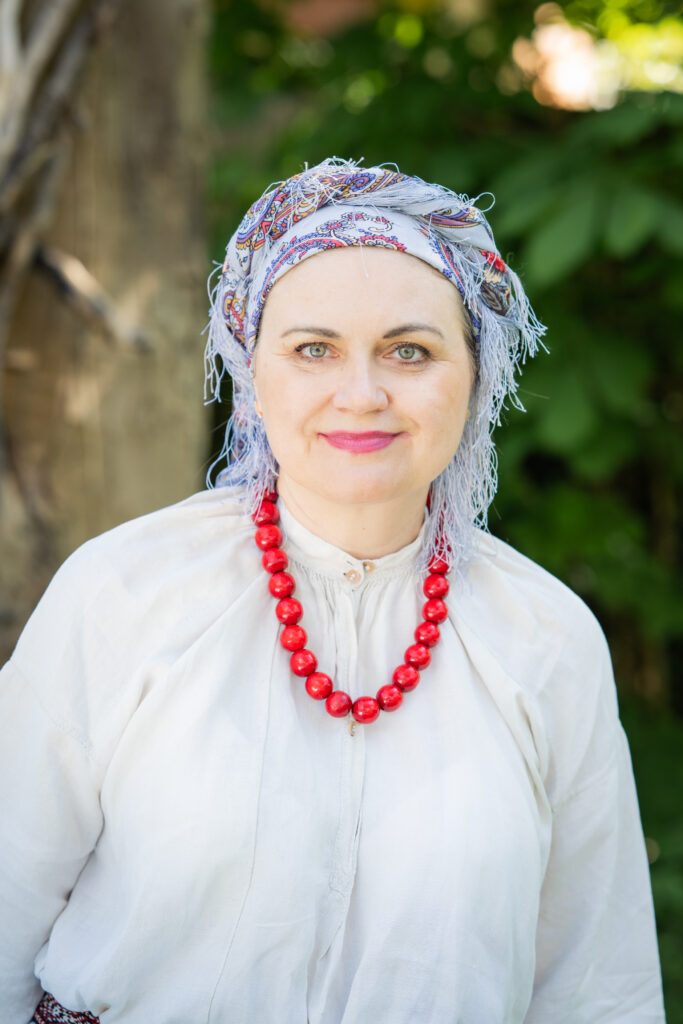
Elmira
I have lived in London for a long time, but only six years ago I came across information about the Belarusian centre in Finchley. Here I found new friends and fulfilled my dream of singing again. I once sang in a choir in Minsk, but then the life whirlwind swept me up, and there was no time for singing. We began singing as amateurs, covering the YouTube grannies. Then Evelina appeared, and life took on new colours.
Authentic folk singing is a very distinctive art form: there is no “right” or “wrong” in it. You sing with your soul. With every sound, the dreams of our ancestors reach us. With every word, a memory from childhood arises. During the day I work with numbers, and I wait for the next rehearsal as a rescue from dull routine.
Aleś
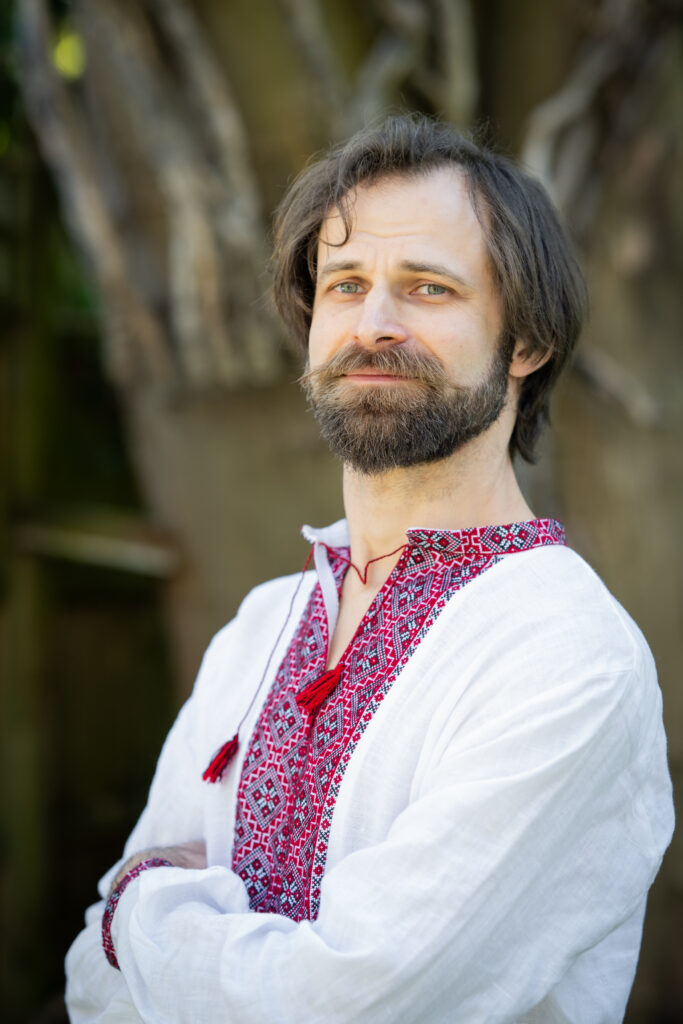
My name is Aleś Kasiak. I was born and raised in the Pinsk region, in the village of Sošna. I have lived in London since 2006. I work in construction. Music has always been my great passion and an unfulfilled dream. Our singing circle has united my love of music, my love of singing, and my connection with Belarusian culture and the Belarusian community in the United Kingdom.
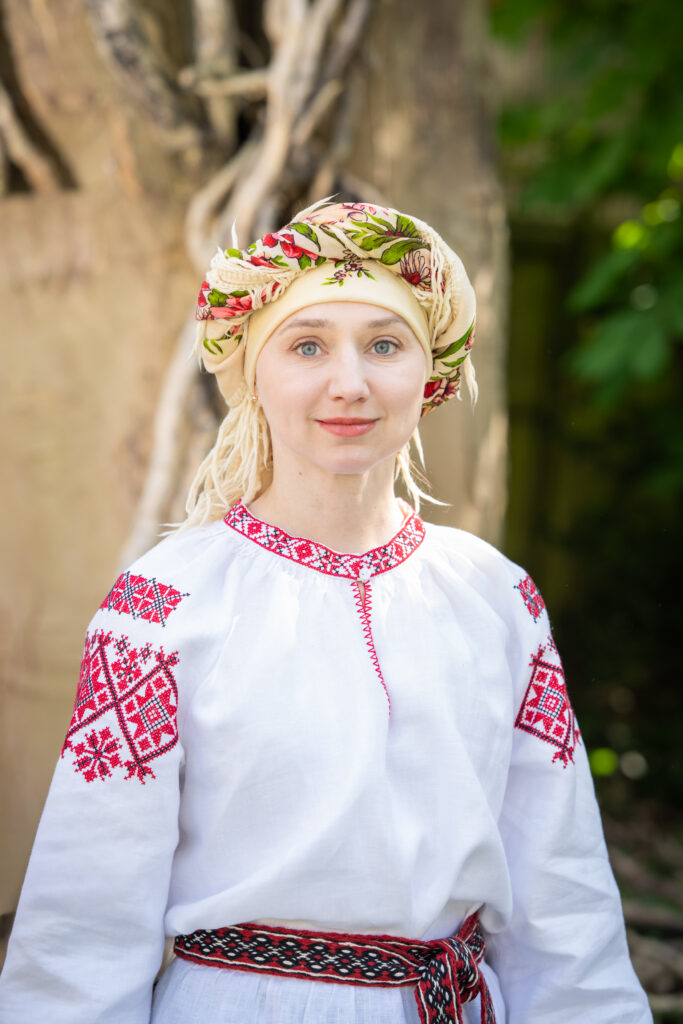
Hanna K
I love singing, I love all things Belarusian, I love being with good people. Here it all came together.
Aliaxey
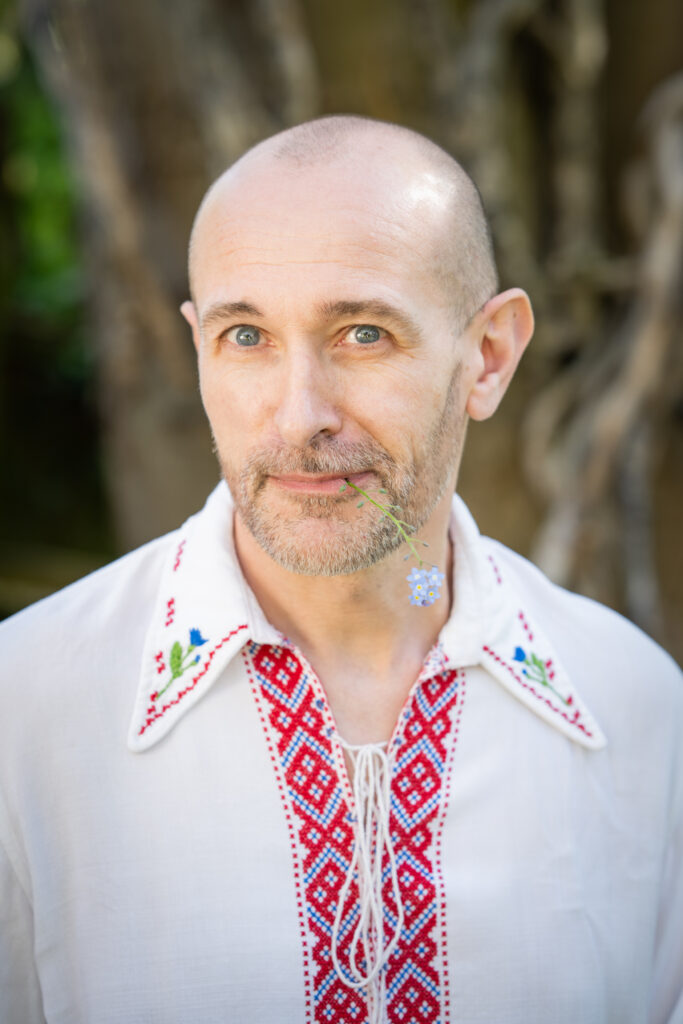
My fascination with folk singing comes, on the one hand, from an interest in the many manifestations of folk culture, both oral and material: from fairy tales and legends, festivals and rituals, and the traditions associated with them, to works of folk art and architecture. On the other hand, I have always felt that the sound of folk song is something natural to me, something that perhaps was absorbed by me in childhood and has never left. The sounds of the village; fairy-tale legends about the places where I was born and grew up; _kućcia_ at Christmas and _Valačobnaje_ at Easter; smudging the house with incense and lighting blessed _hramnicy_ candles during storms and thunder; the smell of sweet flag and birch in my grandfather’s house at Green Feast (Pentecost); the late autumn apples of deep crimson that people brought to lay on graves at _Dziady_ — the day of remembrance of the dead; and the songs that could still occasionally be heard from older women.
After moving to London, I met other Belarusians who were passionate about folk song, music and traditions, and who wanted to sing together and share the beauty and depth of our folk culture with people of different backgrounds in a British setting.